Total War: WARHAMMER Bretonnia Guide: Lords and Units
Master Total War: WARHAMMER Bretonnia with a guide to Legendary Lords, knightly vows, Chivalry, army units, and the original campaign's item quest chains.
Jump to
What Is Bretonnia, and Is It Free?
Total War: WARHAMMER Bretonnia campaigns put powerful knights at the center of both your army and your kingdom. Chivalry affects public order, leadership, and your path toward the campaign’s final challenge. Managing your lord’s knightly vows matters, too, because they reduce the upkeep of the cavalry that defines your roster.
Bretonnia is a free downloadable race for owners of the original game, including the Old World Edition. It adds three Legendary Lords, a playable Grand Campaign race, and an expanded roster for custom and multiplayer battles. You can get the free Bretonnia content on Steam.
The original game supports these platforms and modes:
| Feature | Options |
|---|---|
| PC platforms | Windows, macOS, Linux |
| Play modes | Single-player, Multi-player, Co-op |
| Competitive multiplayer | Online PvP, LAN PvP |
Bretonnia also appears in Mortal Empires in the second game and Immortal Empires in the third. This guide focuses on the original game’s campaign, particularly its lord skills, Blessing rules, and item quest chains.
Bretonnia’s Three Legendary Lords
Your starting choice determines whether you lead Bretonnia, Bordeleaux, or Carcassonne. Each has a distinct Legendary Lord, with a choice between frontline melee leadership and Life magic.
| Legendary Lord | Faction | Combat focus | Mount options |
|---|---|---|---|
| Louen Leoncoeur | Bretonnia | Melee | Barded Warhorse, Royal Pegasus, Beaquis |
| Alberic | Bordeleaux | Melee | Barded Warhorse, Royal Pegasus, Hippogryph |
| The Fay Enchantress | Carcassonne | Lore of Life spellcaster | Silvaron |
Louen Leoncoeur
Bretonnia’s warrior-king leads from the front. His mount options include a Barded Warhorse, a Royal Pegasus, and Beaquis, his named Hippogryph.
Choose Louen if you want your Legendary Lord to take a direct melee role alongside the kingdom’s knights.
Alberic
Alberic leads Bordeleaux and is another melee-focused option. He has access to a Barded Warhorse, Royal Pegasus, and Hippogryph.
His personal item quest involves occupying Mousillon, moving a Paladin between several provinces, and meeting a treasury requirement. Plan those movements around your wars rather than sending the required hero away without considering the next objective.
The Fay Enchantress
The Fay Enchantress represents the Lady of the Lake and leads Carcassonne. She uses the Lore of Life and can ride her unicorn, Silvaron.
Choose her if you want your starting Legendary Lord to provide spellcasting. For additional magical support, Bretonnia can recruit Prophetesses as army leaders and Damsels as heroes, with access to the Lores of Beasts, Heavens, or Life.
Paladins fill the martial hero role and can take Pegasus mounts.
Bretonnia’s Unit Roster
Knightly orders form the heart of Bretonnian armies, supported by peasant infantry, bowmen, mounted yeomen, and trebuchets. The roster gives you ground cavalry and flying cavalry alongside several infantry options.
Knights and Mounted Units
The ground cavalry roster includes:
- Mounted Yeomen
- Knights Errant
- Knights of the Realm
- Questing Knights
- Grail Knights
- Grail Guardians
Mounted Yeomen Archers provide a ranged cavalry option. Flying cavalry includes Pegasus Knights, Royal Pegasus Knights, and Royal Hippogryph Knights.
Build your recruitment plan around both the knightly units you want and the upkeep reductions available to their commanding lord. Recruiting the cavalry and preparing its leader belong in the same budget.
Infantry and Bowmen
Bretonnia’s melee infantry includes Peasant Mob, Foot Squires, Spearmen-at-arms, Men-at-Arms, Battle Pilgrims, and Grail Reliquae. Spearmen and Men-at-Arms also have shielded variants, while Men-at-Arms have a polearm variant.
For ranged infantry, you can recruit:
- Peasant Bowmen
- Peasant Bowmen (Fire Arrows)
- Peasant Bowmen (Pox Arrows)
Use these options to add infantry and missile support around your knights. Avoid spending your entire recruitment budget on cavalry if you also intend to field bowmen or artillery.
Trebuchets
Bretonnia has two artillery choices: the Field Trebuchet and Blessed Field Trebuchet.
Include trebuchet recruitment in your army planning if you want artillery support. The faction’s knightly identity still leaves room for a force that combines mounted troops, infantry, ranged units, and siege engines.
Knightly Vows and the Peasant Economy
Bretonnia’s feudal structure shapes its campaign identity. The peasantry funds the nobility’s military through agricultural labor and taxation, while knights carry the responsibility of defending the realm. The Peasant Economy sits alongside Chivalry and Knightly Vows as a distinctive racial mechanic.
 Image: Steam / CREATIVE ASSEMBLY
For army upkeep, pay particular attention to three skills available to Bretonnian Lords and Prophetesses in the original game:
- Knight’s Vow
- Questing Vow
- Grail Vow
These skills provide major upkeep reductions for the corresponding knightly orders in that lord’s army.
Inspect a newly recruited leader’s skills before assigning expensive knights to the army. Match your cavalry recruitment to the relevant vow skills, and account for their upkeep when planning a second force.
Chivalry and the Errantry War
Chivalry is tracked by a meter at the top of the campaign interface. It influences the stability of your kingdom and your progress toward Bretonnia’s endgame objective.
Heroic Victories and completing quest chains can increase Chivalry. Higher Chivalry brings benefits including better public order, bonus unit experience, and reduced corruption.
Actions such as attacking other Bretonnian factions and sacking settlements can lower it. Low Chivalry can reduce public order and army leadership, with unrest potentially contributing to rebellions.
Before declaring war on another Bretonnian faction or choosing to sack a settlement, weigh the immediate gain against those campaign penalties. Pursue quest chains alongside your territorial objectives to work toward rewards and Chivalry together.
As the campaign advances and your Chivalry reaches the required threshold, a dilemma leads toward the Errantry War, Bretonnia’s climactic endgame battle. Keep that objective in view when making expansion decisions: territory is only one part of your campaign progress.
The Blessing of the Lady and the Green Knight
The Lady’s favor provides both battlefield protection and access to Bretonnia’s legendary protector.
How the Blessing Works
In the original game, a lord and army that achieve a Heroic Victory receive the Blessing of the Lady, granting a Ward Save in future battles.
There are two important ways to lose that protection:
- A unit that routs loses the Blessing for the remainder of that battle.
- An army that refuses battle, such as by retreating from an attack on the campaign map, loses the Blessing.
Certain high-tier units, including Grail Knights, have the Blessing as an inherent unit trait.
Consider the loss of the Blessing when deciding whether to retreat on the campaign map. During battle, pay attention to units close to routing, since their protection depends on holding their nerve.
Calling the Green Knight
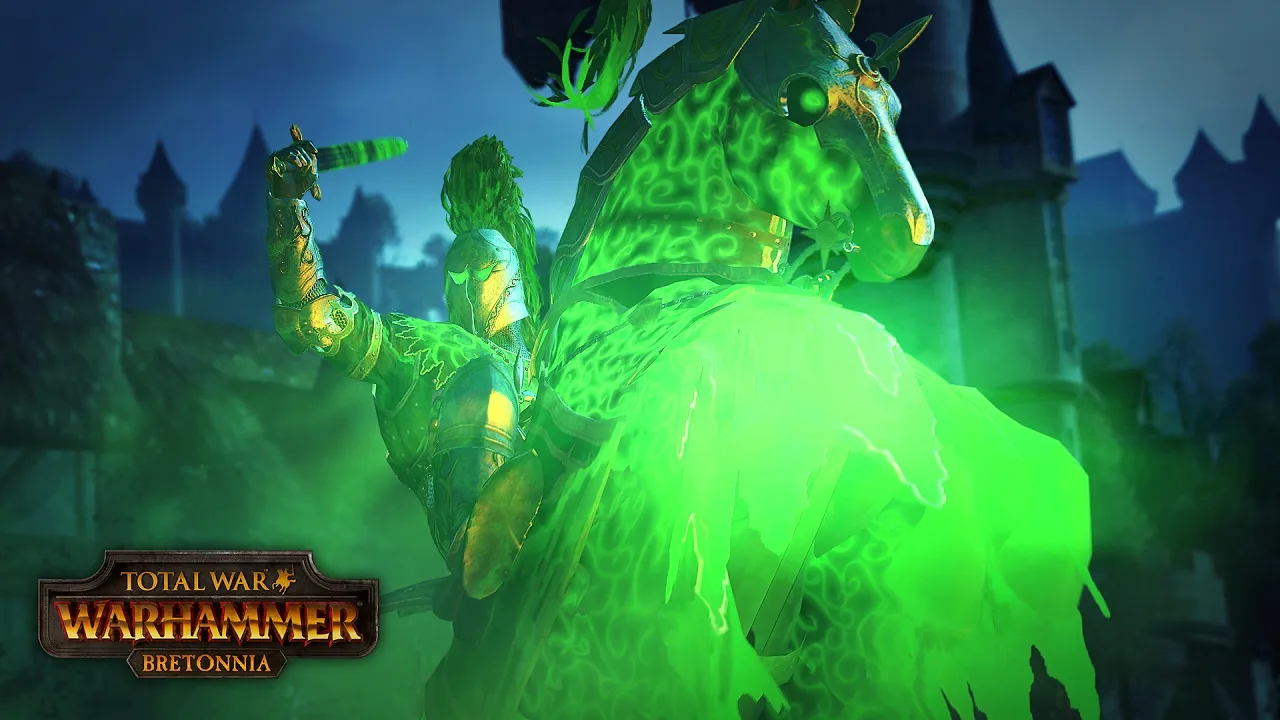
A sufficiently chivalrous leader can temporarily summon the Green Knight. He appears as a Legendary Hero with preset skills and abilities, riding his spirit-charger Shadowsteed and wielding the Dolorous Blade.
His aid is temporary, and summons are limited during the campaign. Reserve a call for a difficult military situation where you want his help immediately.
Legendary Lord Item Quests in the Original Campaign
Each of Bretonnia’s three starting Legendary Lords has a personal item quest. The chains below apply to the original Grand Campaign.
Read each active objective carefully. Moving a character into a region and deploying a hero are different requirements, and a province-wide objective gives you a different destination requirement from one naming a specific region.
Louen Leoncoeur: Sword of Couronne
The quest becomes available at rank 9:
- Have 3 Knights of the Realm in Louen’s army.
- Move any Lord or Hero to the Gisoreux region.
- Deploy a Paladin in the Forest of Arden province.
- Win the Sword of Couronne battle.
Plan the cavalry requirement before sending a character toward Gisoreux. Keep a Paladin available for the deployment step.
Alberic: Trident of Manaan
The quest becomes available at rank 3:
- Deploy a Paladin in the Lyonesse province.
- Occupy Mousillon.
- Deploy a Paladin in the Bordeleaux province.
- Begin a turn with at least 10,000 in your treasury.
- Deploy a Paladin in the Estalia province.
- Win the Trident of Manaan battle.
Hold the required treasury balance through the start of the turn. Reaching 10,000 and spending below it before the turn begins does not meet that objective’s wording.
The Fay Enchantress: The Chalice of Potions
The quest becomes available at rank 8:
- Build the Tower of the Enchantress in Carcassonne.
- Deploy a Damsel in Nordland.
- Deploy a Damsel in the Vanaheim Mountains province.
- Move any Lord or Hero to the Couronne region.
- Win The Chalice of Potions battle.
Prepare a Damsel for the travel requirements while arranging construction in Carcassonne. Follow the deployment objectives in order, then send an eligible character to Couronne for the final movement step.
Continue with
 Total War: WARHAMMER Dwarfs: Army and Campaign GuideMaster Total War: WARHAMMER dwarfs with army roles, firing lanes, flank defense, and campaign tips to hold your ground and reclaim the ancestral holds.
More in Factions
Total War: WARHAMMER Empire Guide: Armies & Campaign
Master the Total War: WARHAMMER Empire with tips on army roles, artillery, cavalry, diplomacy, and campaign defense. Build a force ready to hold the line.
Total War: WARHAMMER Factions: Army and Campaign Guide
Explore Total War: WARHAMMER factions, compare their armies and campaign styles, and learn how to use diplomacy, armor, cavalry, and magic to win battles.
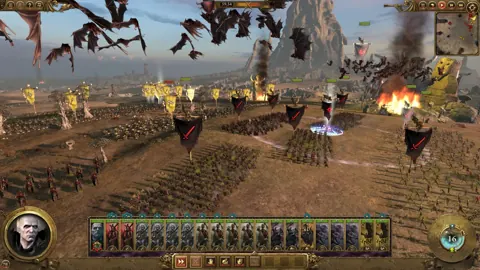
Total War: WARHAMMER Greenskins: Campaign & Army Guide
Master Total War: WARHAMMER greenskins with tips on Fightiness, Waaagh! armies, Grimgor, unit choices, and building an economy that keeps conquest moving.
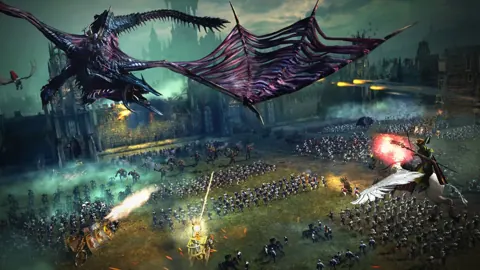
Total War: WARHAMMER Vampire Counts Strategy Guide
Master Total War: WARHAMMER vampire counts with army tips, early campaign tactics, healing support, and Regiments of Renown choices for tougher battles.
Continue exploring
Join the community
Official channels for news, updates and player help: